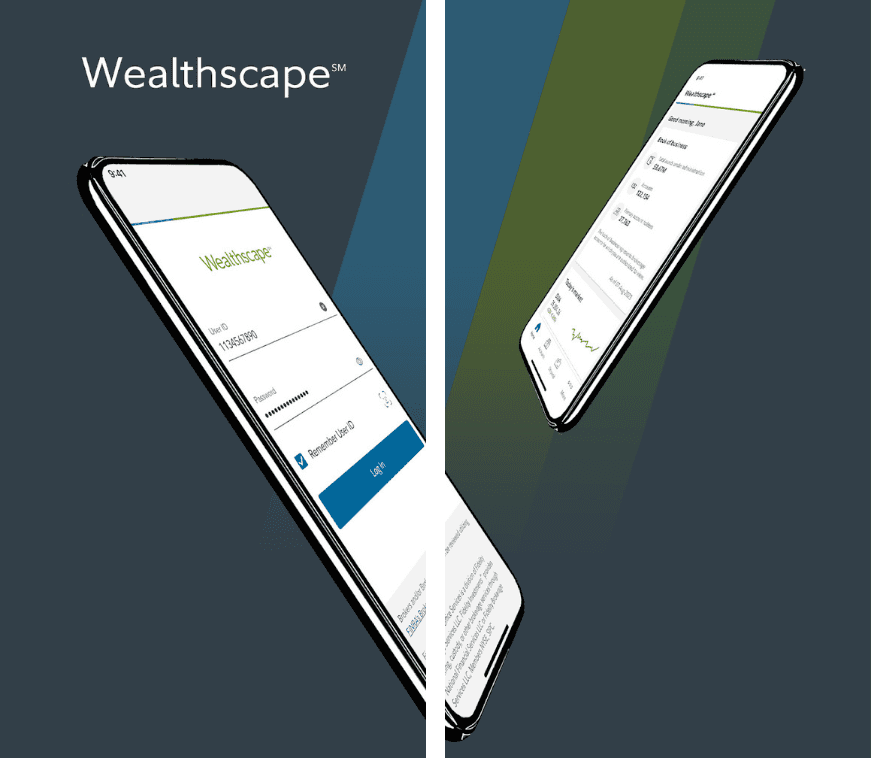
The Challenge
Account Profile is one of the most frequently visited pages within Wealthscape and a common source of frustration for users.
Over time, the page had grown to accommodate new functionality, regulatory requirements, and business needs. Information was difficult to find, terminology was often unclear, and users frequently struggled to navigate the large amount of account data available to them.
At the same time, Wealthscape was in the middle of a broader platform modernization effort. This created an opportunity to rethink the page while also introducing new functionality designed to improve self-service and reduce support calls.
As the lead UX designer, I was responsible for redesigning the page and establishing a structure that could support both current and future needs.
The challenge extended beyond visual redesign. Legacy system constraints often prevented straightforward solutions and required creative workarounds. Different users had access to different amounts of information, which meant the layout needed to remain effective across a variety of scenarios. I also needed to account for future growth, ensuring the page could accommodate additional information over time without becoming difficult to navigate.
Ultimately, the goal was to create a framework that helped users quickly find what they needed while balancing business requirements, regulatory needs, technical constraints, and long-term scalability.
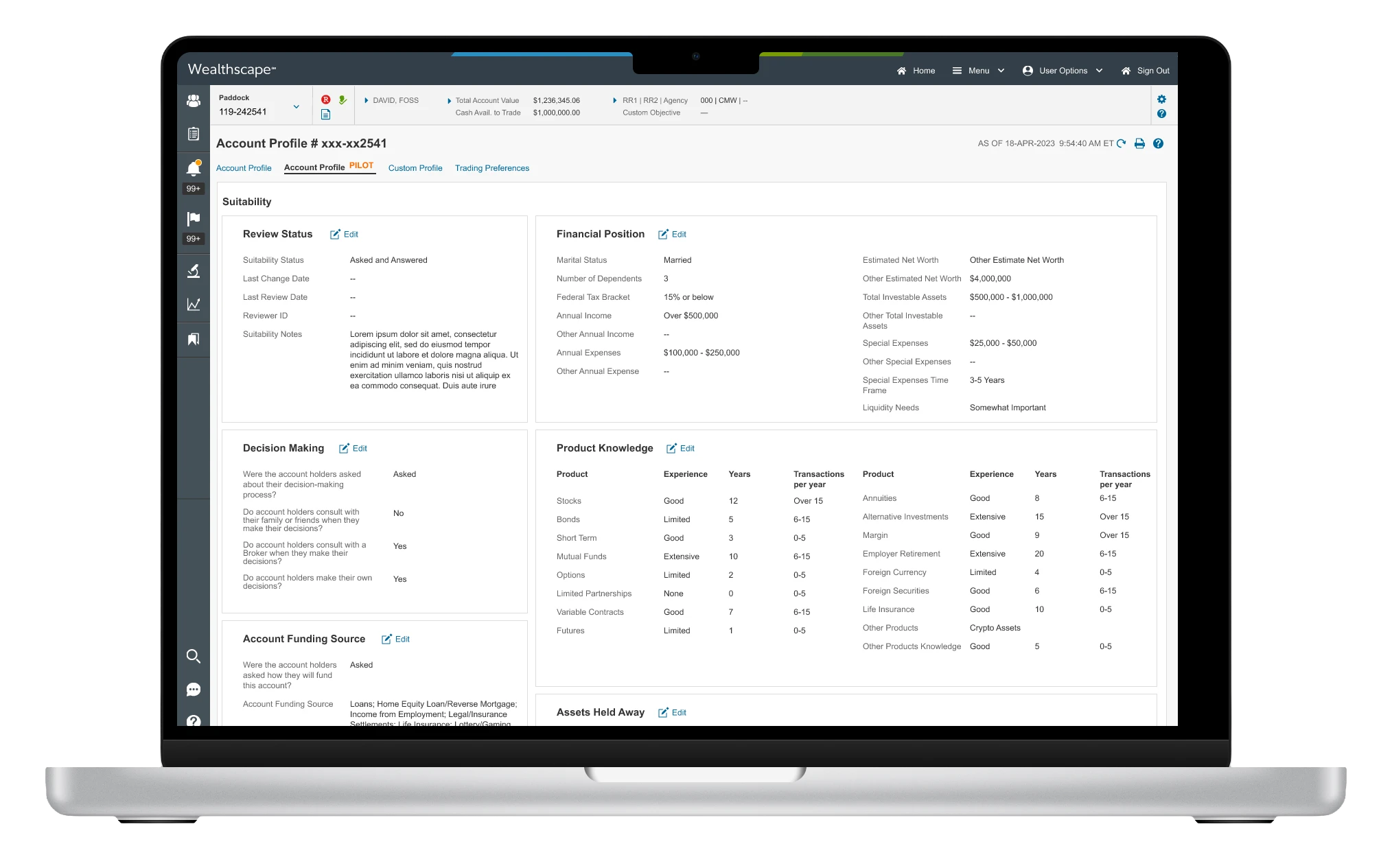
Research & Insights
One of the biggest surprises during research was discovering that users weren’t spending the majority of their time in the areas we expected.
While stakeholders had strong assumptions about which information was most important, research revealed that users were primarily focused on finding account information, personal details, beneficiaries, and other individuals associated with the account.
Another interesting finding was that users cared less about navigating a perfect hierarchy and more about being able to quickly scan and locate information.
This shifted some of our thinking throughout the project.
Rather than focusing solely on reorganizing content, we started thinking more about how layout, grouping, and visual hierarchy could help users quickly orient themselves and find the information they needed.
The challenge wasn’t simply deciding where information should live. It was helping users make sense of a large amount of information that varied depending on the account, user type, and available data.
Designing the Experience
As the lead UX designer, I was responsible for defining the overall structure, layout, and information organization for the redesigned page.
One of the most complex aspects of the project was balancing user needs with the realities of the underlying systems. Information was coming from multiple data sources, some fields were required for regulatory reasons, and different users could see very different amounts of information depending on their role and account relationships.
This created ongoing discussions around what information should be displayed, where it should live, and how it should be presented in a way that felt consistent.
A large part of my focus was designing a flexible layout system rather than a single page design. The structure needed to support a wide range of account scenarios while remaining easy to scan and navigate.
Scalability was also a key consideration. New functionality and additional data requirements were regularly being introduced, so the design needed to accommodate future growth without requiring the page to be restructured each time new information was added.
Rather than treating the redesign as a visual refresh, I approached it as an information architecture challenge. The goal was to create a framework that could help users quickly understand what they were looking at, regardless of how much information was being displayed.
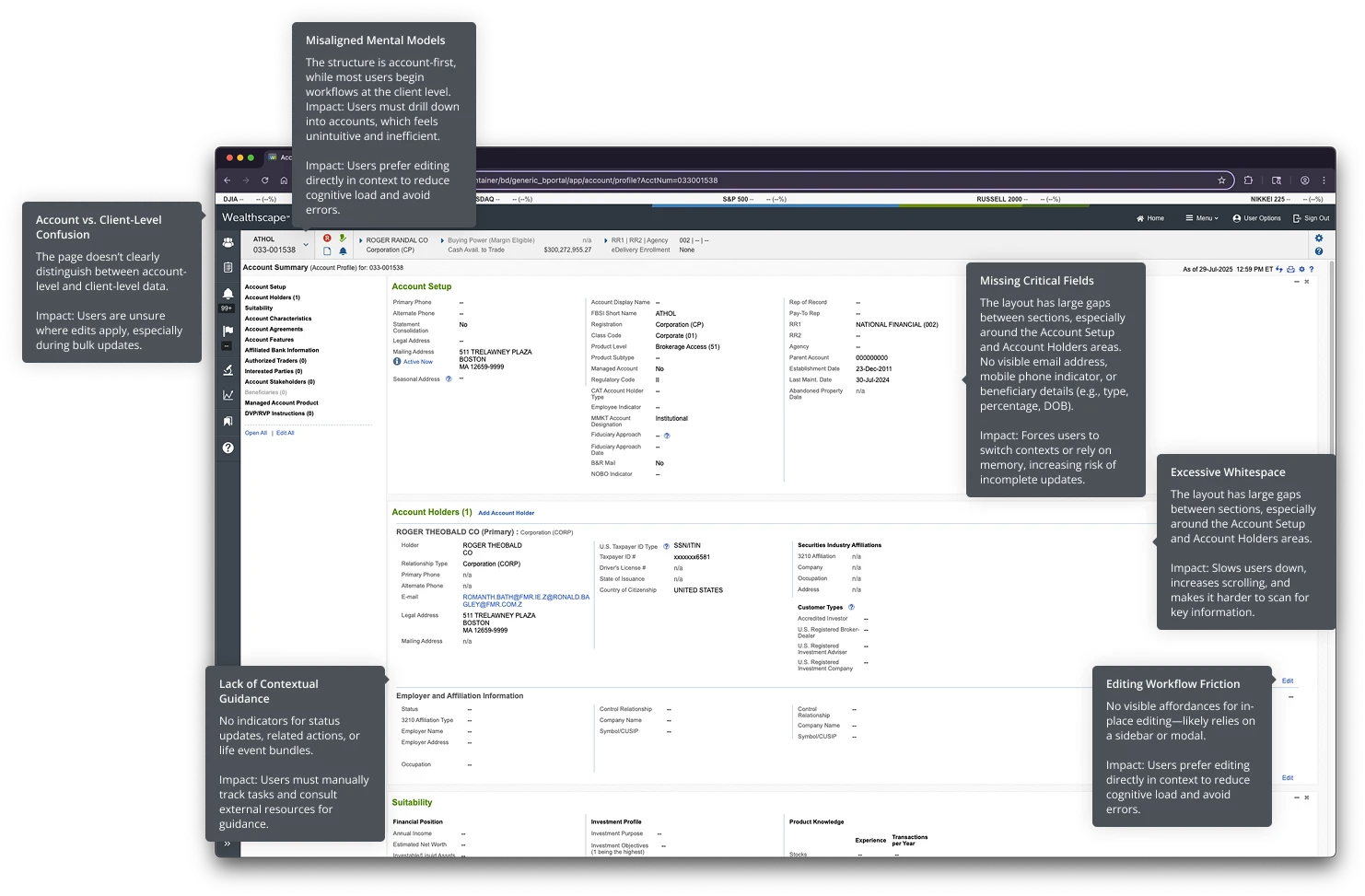
Pilot, Impact, and Reflection
Before redesigning the advisor experience, the team first launched a redesigned version of Account Profile within Wealthscape Investor.
This pilot gave us an opportunity to test assumptions, gather feedback, and understand how users interacted with the new organizational model before expanding the approach to advisors.
The feedback helped validate several design decisions and provided valuable insight into how users searched for, interpreted, and navigated account information.
Looking back, one of the biggest lessons from this project was that organization and clarity are not always the same thing.
Initially, it was tempting to focus on creating the “right” hierarchy for the information. Through research, we learned that users were often more concerned with quickly locating information than understanding a perfect organizational structure.
That insight influenced many of the design decisions that followed and reinforced the importance of designing around how people actually search for and consume information rather than how we think information should be organized.
The Challenge
Account Profile is one of the most frequently visited pages within Wealthscape and a common source of frustration for users.
Over time, the page had grown to accommodate new functionality, regulatory requirements, and business needs. Information was difficult to find, terminology was often unclear, and users frequently struggled to navigate the large amount of account data available to them.
At the same time, Wealthscape was in the middle of a broader platform modernization effort. This created an opportunity to rethink the page while also introducing new functionality designed to improve self-service and reduce support calls.
As the lead UX designer, I was responsible for redesigning the page and establishing a structure that could support both current and future needs.
The challenge extended beyond visual redesign. Legacy system constraints often prevented straightforward solutions and required creative workarounds. Different users had access to different amounts of information, which meant the layout needed to remain effective across a variety of scenarios. I also needed to account for future growth, ensuring the page could accommodate additional information over time without becoming difficult to navigate.
Ultimately, the goal was to create a framework that helped users quickly find what they needed while balancing business requirements, regulatory needs, technical constraints, and long-term scalability.
Research & Insights
One of the biggest surprises during research was discovering that users weren’t spending the majority of their time in the areas we expected.
While stakeholders had strong assumptions about which information was most important, research revealed that users were primarily focused on finding account information, personal details, beneficiaries, and other individuals associated with the account.
Another interesting finding was that users cared less about navigating a perfect hierarchy and more about being able to quickly scan and locate information.
This shifted some of our thinking throughout the project.
Rather than focusing solely on reorganizing content, we started thinking more about how layout, grouping, and visual hierarchy could help users quickly orient themselves and find the information they needed.
The challenge wasn’t simply deciding where information should live. It was helping users make sense of a large amount of information that varied depending on the account, user type, and available data.
Designing the Experience
As the lead UX designer, I was responsible for defining the overall structure, layout, and information organization for the redesigned page.
One of the most complex aspects of the project was balancing user needs with the realities of the underlying systems. Information was coming from multiple data sources, some fields were required for regulatory reasons, and different users could see very different amounts of information depending on their role and account relationships.
This created ongoing discussions around what information should be displayed, where it should live, and how it should be presented in a way that felt consistent.
A large part of my focus was designing a flexible layout system rather than a single page design. The structure needed to support a wide range of account scenarios while remaining easy to scan and navigate.
Scalability was also a key consideration. New functionality and additional data requirements were regularly being introduced, so the design needed to accommodate future growth without requiring the page to be restructured each time new information was added.
Rather than treating the redesign as a visual refresh, I approached it as an information architecture challenge. The goal was to create a framework that could help users quickly understand what they were looking at, regardless of how much information was being displayed.
Pilot, Impact, and Reflection
Before redesigning the advisor experience, the team first launched a redesigned version of Account Profile within Wealthscape Investor.
This pilot gave us an opportunity to test assumptions, gather feedback, and understand how users interacted with the new organizational model before expanding the approach to advisors.
The feedback helped validate several design decisions and provided valuable insight into how users searched for, interpreted, and navigated account information.
Looking back, one of the biggest lessons from this project was that organization and clarity are not always the same thing.
Initially, it was tempting to focus on creating the “right” hierarchy for the information. Through research, we learned that users were often more concerned with quickly locating information than understanding a perfect organizational structure.
That insight influenced many of the design decisions that followed and reinforced the importance of designing around how people actually search for and consume information rather than how we think information should be organized.
The Challenge
Account Profile is one of the most frequently visited pages within Wealthscape and a common source of frustration for users.
Over time, the page had grown to accommodate new functionality, regulatory requirements, and business needs. Information was difficult to find, terminology was often unclear, and users frequently struggled to navigate the large amount of account data available to them.
At the same time, Wealthscape was in the middle of a broader platform modernization effort. This created an opportunity to rethink the page while also introducing new functionality designed to improve self-service and reduce support calls.
As the lead UX designer, I was responsible for redesigning the page and establishing a structure that could support both current and future needs.
The challenge extended beyond visual redesign. Legacy system constraints often prevented straightforward solutions and required creative workarounds. Different users had access to different amounts of information, which meant the layout needed to remain effective across a variety of scenarios. I also needed to account for future growth, ensuring the page could accommodate additional information over time without becoming difficult to navigate.
Ultimately, the goal was to create a framework that helped users quickly find what they needed while balancing business requirements, regulatory needs, technical constraints, and long-term scalability.
Research & Insights
One of the biggest surprises during research was discovering that users weren’t spending the majority of their time in the areas we expected.
While stakeholders had strong assumptions about which information was most important, research revealed that users were primarily focused on finding account information, personal details, beneficiaries, and other individuals associated with the account.
Another interesting finding was that users cared less about navigating a perfect hierarchy and more about being able to quickly scan and locate information.
This shifted some of our thinking throughout the project.
Rather than focusing solely on reorganizing content, we started thinking more about how layout, grouping, and visual hierarchy could help users quickly orient themselves and find the information they needed.
The challenge wasn’t simply deciding where information should live. It was helping users make sense of a large amount of information that varied depending on the account, user type, and available data.
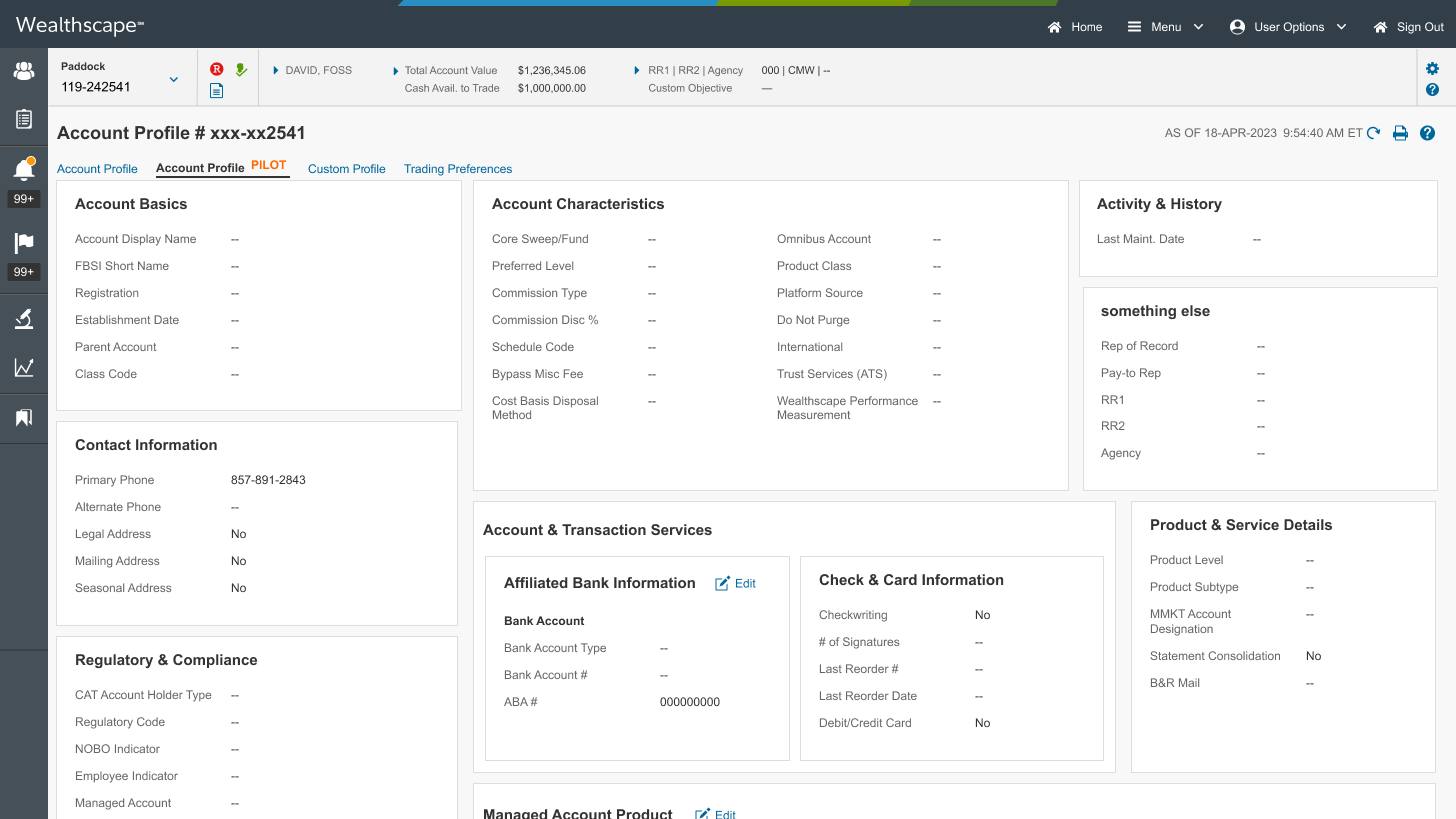
Designing the Experience
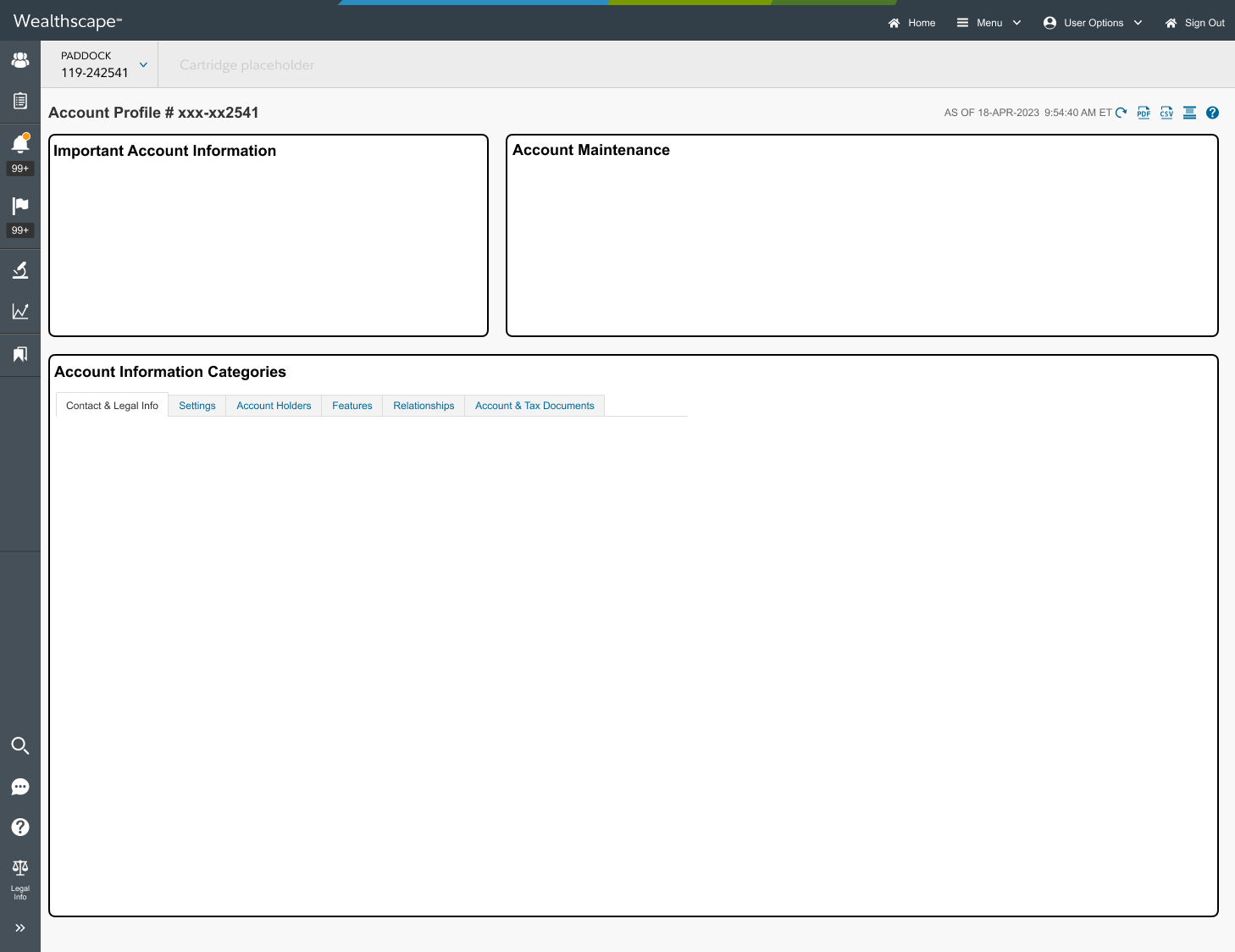
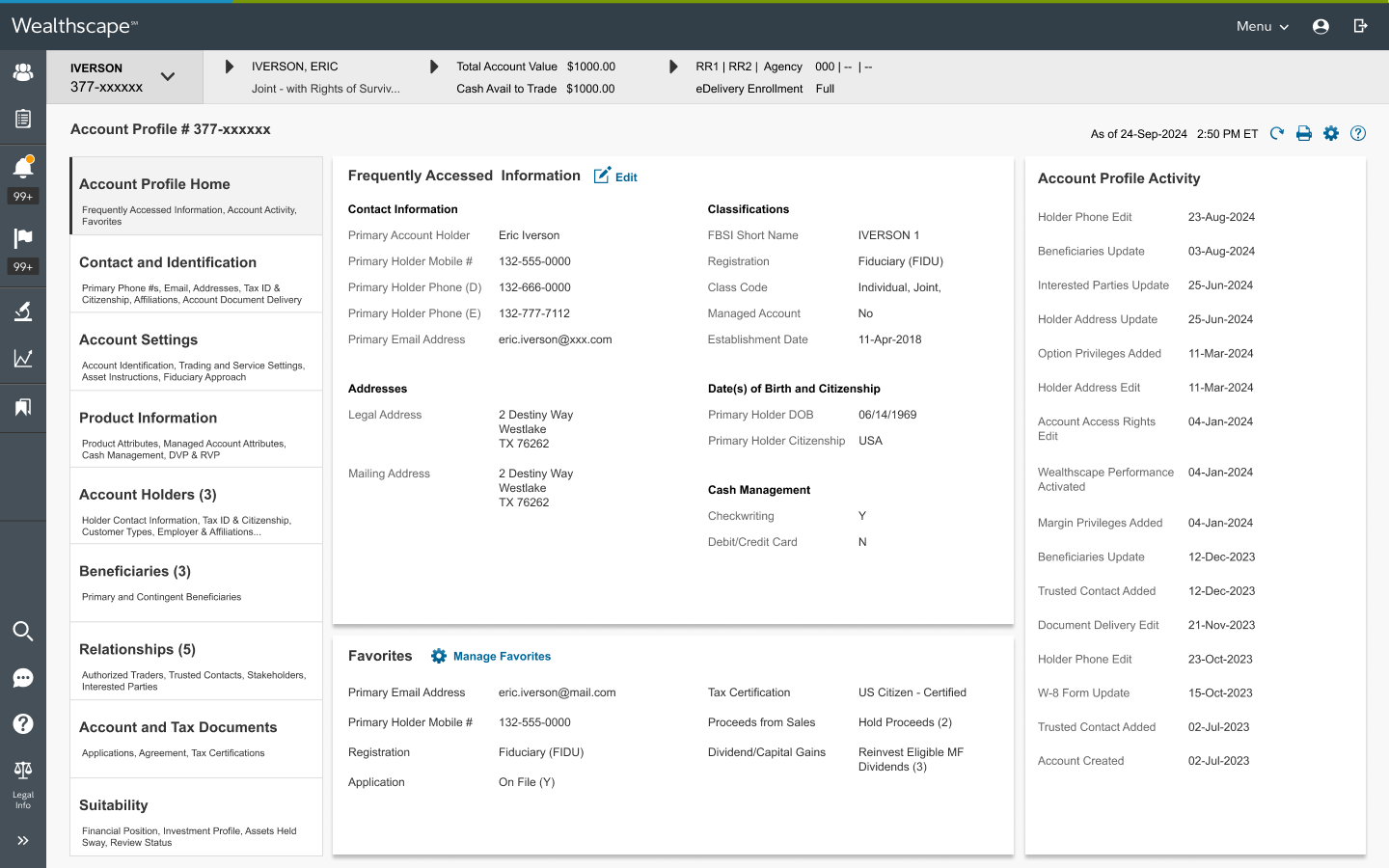
As the lead UX designer, I was responsible for defining the overall structure, layout, and information organization for the redesigned page.
One of the most complex aspects of the project was balancing user needs with the realities of the underlying systems. Information was coming from multiple data sources, some fields were required for regulatory reasons, and different users could see very different amounts of information depending on their role and account relationships.
This created ongoing discussions around what information should be displayed, where it should live, and how it should be presented in a way that felt consistent.
A large part of my focus was designing a flexible layout system rather than a single page design. The structure needed to support a wide range of account scenarios while remaining easy to scan and navigate.
Scalability was also a key consideration. New functionality and additional data requirements were regularly being introduced, so the design needed to accommodate future growth without requiring the page to be restructured each time new information was added.
Rather than treating the redesign as a visual refresh, I approached it as an information architecture challenge. The goal was to create a framework that could help users quickly understand what they were looking at, regardless of how much information was being displayed.
Pilot, Impact, and Reflection
Before redesigning the advisor experience, the team first launched a redesigned version of Account Profile within Wealthscape Investor.
This pilot gave us an opportunity to test assumptions, gather feedback, and understand how users interacted with the new organizational model before expanding the approach to advisors.
The feedback helped validate several design decisions and provided valuable insight into how users searched for, interpreted, and navigated account information.
Looking back, one of the biggest lessons from this project was that organization and clarity are not always the same thing.
Initially, it was tempting to focus on creating the “right” hierarchy for the information. Through research, we learned that users were often more concerned with quickly locating information than understanding a perfect organizational structure.
That insight influenced many of the design decisions that followed and reinforced the importance of designing around how people actually search for and consume information rather than how we think information should be organized.
← Previous Post